

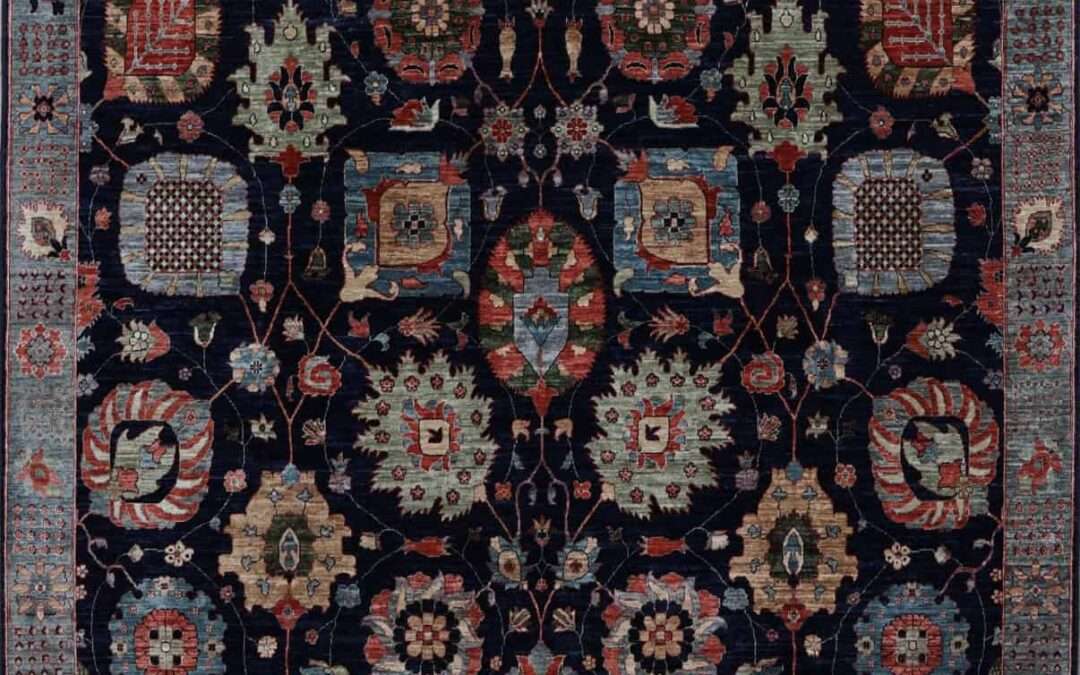
Imagine a family on an ordinary Saturday morning. A toddler is wandering across the living room with a juice cup that doesn’t quite live up to its “spill-proof” promise. The dog has just come in from the wet yard. The older kids are dragging every cushion in the house into a blanket fort in the middle of the floor. And amid all that, one parent asks the question so many families ask: should we even buy a nice rug while the kids are little?
It’s a fair question. An active home doesn’t need a cheap rug that gets replaced every few years. It needs the right rug, and for many busy homes, hand-knotted rugs are the answer. At The Rug Merchant, a family business in floor covering since 1970, we help families shopping for rugs in Evansville and beyond find that rug by looking past the price tag to how it’s made.
What Makes a Rug Family-Friendly?
A family-friendly rug, one that’s kid-friendly and pet-friendly at the same time, isn’t about one magic material. It comes down to five things working together: the fiber it’s made from, the way it’s constructed, how tall the pile is, the pattern and color on top, and the pad underneath.
Think of it like choosing a family car: what matters is how it’s built, because that decides whether it still runs well after years of school runs, road trips, and crackers crushed between the seats. Rugs work the same way. Two rugs can look nearly identical in a photo and behave completely differently after a year of sneakers, paws, and spilled snacks.
Start with the Fiber: Wool vs. Synthetic
Wool is the traditional fiber for hand-knotted rugs, and its secret is built into each strand. Wool fibers have a natural crimp, a springy wave that helps them recover their shape after being pressed down. In everyday terms, wool rugs bounce back after footsteps, crawling knees, and fort-building. Wool also contains lanolin, a natural oil that helps it resist soil and stains.
Synthetics such as polypropylene and nylon have their place, too. They’re usually easier on the budget, and many resist stains well; polypropylene, for example, doesn’t absorb water-based spills like juice. It does flatten faster than nylon under heavy traffic, though, so polypropylene is often best in playrooms and basements rather than the busiest path through the house.
Then there are the fibers to save for quieter rooms. Silk and viscose have a beautiful sheen, but they’re more delicate. Viscose in particular doesn’t handle moisture, spills, or heavy wear well.
Here’s how that plays out. Imagine our family’s toddler tips the juice cup onto two different rugs. On wool, there’s usually time to grab a cloth and blot it up. On viscose, the spill, and even the water used to rinse it, can leave a lasting mark.
Why Hand-Knotted Rugs Can Outlast the Toddler Years
If one type of rug changes the “should we wait?” question, it’s this one. Hand-knotted rugs are made the way rugs have been made for generations: a weaver ties each knot by hand around the rug’s foundation threads, row after row, and the pattern is built from those knots. The design isn’t printed or glued on. It’s part of the rug itself, which is why the back usually shows the same pattern as the front.
Compare that with a tufted rug, where yarn is punched through a canvas and held in place by a layer of latex glue under a fabric backing. Over time, that latex can dry out and break down, and the rug may start to shed and lose its body. Knotted construction has no glue to fail.
For a family, that difference matters. When one of these rugs gets a chewed corner or a worn edge, it can be repaired and restored instead of replaced. It can move from the living room to a child’s first apartment and, one day, on to the next generation. That’s what our motto, “Buy It Once, Love It Forever,” really means.
Rugs like these are an investment, and they often cost more than machine-made rugs of a similar size.
Pattern and Pile: The Everyday Secrets
Some of the best family-friendly features are hiding in plain sight. Traditional Oriental and Persian designs are a parent’s quiet ally: their rich, busy patterns naturally disguise crumbs, small stains, and everyday wear. A plain cream rug, on the other hand, shows every paw print.
Pile height matters, too. A low pile is easier to vacuum and gives block towers and toy cars a steadier surface. Color does its share of the work as well: mid-tones such as rust, navy, and warm gray are more forgiving than pale cream or ivory.
Room by Room for Busy Households
In the living room, where the family gathers and the blanket forts go up, a wool or hand-knotted rug earns its place: a durable area rug that takes daily traffic and still looks inviting years from now.
The playroom is where a low pile and a forgiving pattern matter most. It’s also a smart spot for a quality machine-made rug, which gives you color and pattern at a friendlier price for a room that sees glue sticks and finger paint.
In the dining room, size is the secret. The rug should be large enough that chair legs stay on it when the chairs are pulled out. A simple rule of thumb is to add three feet to both the length and width of your table, which leaves about 18 inches for the chairs on each side. A 4-by-6-foot table, for example, calls for a rug of at least 7 by 9 feet, so an 8-by-10 would work well. Our guide to choosing the right size rug covers other rooms, too.
At the entryway, choose a dense, low-pile rug that catches dirt from shoes and paws before it travels through the house.
Don’t Skip the Rug Pad
In a busy house, a rug pad is one of the most important pieces. A good pad keeps the rug from sliding, which matters when kids are racing through the room. It also cushions the rug, helps it lie flat, and protects the floor underneath, so both last longer. We offer rug padding for different floors, including cushion-air non-skid pads, which grip well under smaller rugs, and Luxehold pads, which give a rug a firm body and won’t stain, discolor, or stick to your floor.
Everyday Care, Plus a Tip for Heirloom Rugs
When something spills, blot it with a clean cloth instead of rubbing, which can push the spill deeper and wear the fibers. Our guide to spot cleaning your area rug covers the details. Vacuum regularly, and rotate the rug every few months so sunlight and foot traffic wear it evenly.
Accidents happen in active homes. If the puppy chews a corner or a busy hallway frays an edge, don’t give up on the rug. Damage like that can often be fixed with professional repair and restoration, which we handle in house.
And if you’ve inherited an older rug, get an antique rug appraisal before you put it in a high-traffic room. Our ORRA-certified appraiser can evaluate its approximate age, condition, and value, so you can decide whether it belongs under the dining table or somewhere a little calmer.
Worth the Drive from Nashville, St. Louis, and Illinois
Choosing a rug for a busy family is best done in person. You want to run your hand across the fiber, press down on the pile, and see how a pattern looks in real light rather than on a screen.
That’s where our showroom comes in. Behind the front door of what looks like a turn-of-the-century home is a showroom of more than 9,500 square feet, filled with hand-knotted, Oriental and Persian, antique, machine-woven, and designer rugs.
Shopping for area rugs in Nashville or St. Louis? Families there may find the trip to Evansville worth it. You’ll find high-end pieces at prices that make the drive worthwhile, and once you’ve chosen, we can deliver by van across the Tri-State area or ship by UPS or FedEx. Plan your visit and make a day of it.
Try It in Your Own Home First
Even after a showroom visit, there’s nothing like seeing a rug in your own space, with your lighting, your furniture, and your family. That’s why we offer free in-home rug trials: choose rugs with our staff’s help or on your own, and try them at home before you decide.
If you’d like more guidance, our in-home consultation brings an expert to your home to measure and talk through your space. It costs $250, and the full amount is credited toward your rug purchase. Either way, a real Saturday morning is the best test there is.
The Right Rug Grows with Your Family
Back to our family’s Saturday morning. With the right rug, the juice gets blotted, the paw prints vacuum away, and the blanket fort comes down at bedtime, leaving a rug that still looks great. Years from now, it will still be there, softened by time and woven into the family’s story. That’s what the best rugs for active families do, and it’s why hand-knotted rugs deserve a close look.
The right rug grows with your family. Visit The Rug Merchant at 1019 Lincoln Ave, Evansville, IN, Tuesday through Friday from 10 AM to 5 PM and Saturday from 9:30 AM to 4:30 PM. You can also call us at 812-423-2338 to ask about a free in-home rug trial or an appraisal.
Frequently Asked Questions
What is the most durable type of rug for a busy family home?
For long-term durability, a wool rug is hard to beat, and a hand-knotted wool rug adds construction with no glue backing to break down. For playrooms and basements, polypropylene is a budget-friendly choice that resists water-based spills.
Are hand-knotted rugs worth it with kids and pets?
For many families, yes. Hand-knotted rugs can be repaired and restored if a corner gets chewed or an edge wears, so they can outlast the toddler years.
Can I try a rug at home before I buy?
Yes. The Rug Merchant offers free in-home rug trials, so you can see a rug with your own lighting, furniture, and family before you decide. Call 812-423-2338 to ask about one.